📡 Tech News

Technology News
& Commentary

Curated tech headlines, opinion, and analysis on the industry I love — filtered through 26+ years of hands-on experience.

2025: The End of the World as We Know It — and the Dawn of a New Epoch

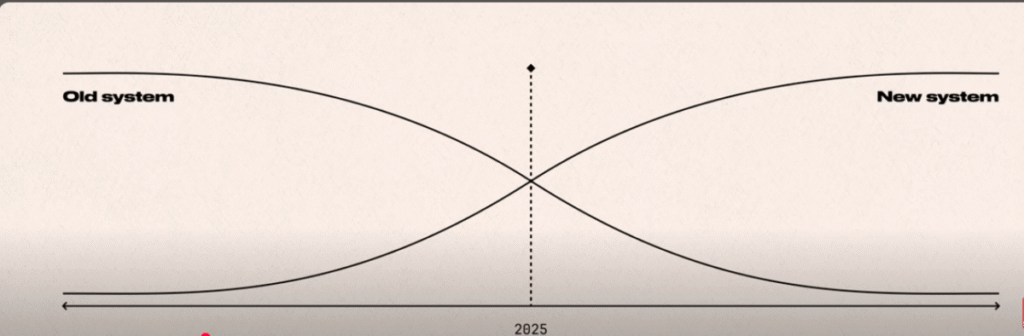
2025 Epoch article header graphic

Human history has always moved in waves. Civilizations rise, institutions stabilize, technologies reshape how we live — and then, inevitably, the old order falters, making way for something new. Futurist Peter Leyden argues that 2025 marks one of these historic inflection points: not the apocalypse, but the end of the 20th-century world order and the beginning of a new epoch driven by breakthrough technologies.

Past Epochs — The Road to 2025

Looking back, major societal transformations tend to come in cycles of roughly 80–100 years. Each cycle ends in crisis, then transitions into renewal.

  • Founding Era (late 1700s–1820s) — The birth of modern democracy and the first industrial stirrings.
  • Industrial Consolidation (mid–late 1800s) — Railroads, steel, and the telegraph forged a new age of connectivity.
  • Post-WWII Order (1945–1970s) — Nations built global institutions; suburbs and consumer culture defined the era.
  • Digital Dawn (1980s–2000s) — Microchips, personal computers, and the internet brought the knowledge economy.

Each phase eventually reached stagnation, and each transition was catalyzed by both crisis and technological innovation.

Present — The 2025 Inflection Point

Key drivers of today's transition: Artificial Intelligence reshaping work and creativity, clean energy systems dismantling fossil fuel dependence, bioengineering revolutionizing health and longevity, and digital governance experimenting with transparency and citizen participation.

Future — The Great Progression (2025–2050)

  • AI-integrated economies — Humans focus on creativity while automation handles routine work.
  • Clean energy dominance — Solar, wind, storage, and fusion power an abundant, sustainable future.
  • Bioengineered health — Personalized medicine, disease eradication, and life extension become normal.
  • Digital governance 2.0 — Blockchain-style systems and open data enable more citizen-driven politics.
  • Planetary cooperation — Institutions adapted to climate and global risks replace brittle 20th-century structures.

By this pattern, 2025 is the hinge point between Transition and Renewal. The choice before us is not whether the transition will come — it already has — but how boldly we build the systems that will define the decades ahead.
Apple Co-Founder Steve Wozniak Stands Up for Right-to-Repair

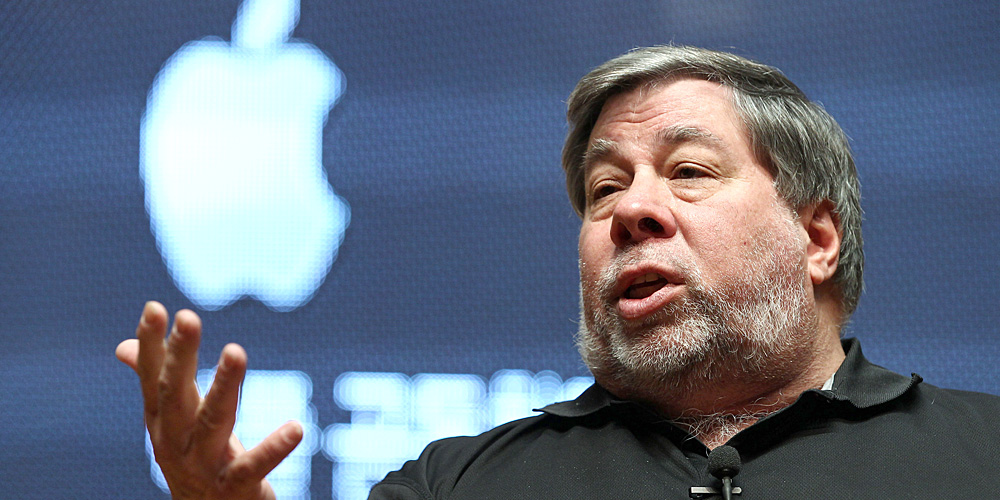
Steve Wozniak speaking at Hanyang University in Seoul, South Korea, 2012

Steve Wozniak, co-founder of Apple Inc., speaks at Hanyang University in Seoul, South Korea, 2012. Photographer: SeongJoon Cho/Bloomberg

Apple is often brought up when talking about right to repair, usually in reference to their anti-repair practices. In response to a Cameo request from right-to-repair advocate Louis Rossmann, Steve Wozniak spoke for almost 10 minutes on the importance of the movement and how it has impacted his life.

Wozniak reflected on how Apple itself was built on open hardware: "We wouldn't have had an Apple, had I not grown up in a very open technology world. Back then, when you bought electronic things like TVs and radios, every bit of the circuits and designs were included on paper. Total open source."

He questioned why companies restrict self-repair: "Look at the Apple II. It shipped with full schematics… this product was the only source of profits for Apple for the first ten years of the company."

He closed with a pointed question: "Is it your computer? Or is it some company's computer? Think about that."

Apple Launches Self-Service Repair Program in Canada

Apple self-service repair program launch in Canada

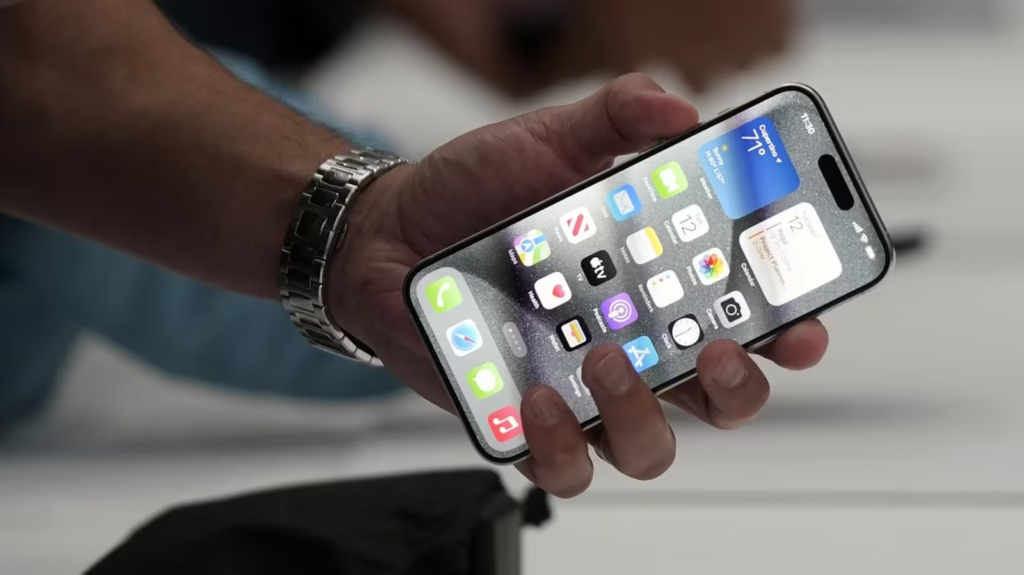
Canadians who want to repair their own Apple devices can now get parts, tools, and manuals from the tech giant. The program gives customers free access to manuals and diagnostic software for iPads, iPhones, and Macs, along with the ability to purchase parts and rent or buy necessary tools.

Canada is the 34th country to get access to the program. Brian Naumann, Apple's VP of AppleCare service and repair, described it as aimed at "broadening device longevity, reducing waste, and empowering both customers and repair professionals."

However, critics note the self-repair route often costs more than in-store repairs. A battery kit for an iPhone 16 runs $135 — versus $99 to have Apple replace it. Alissa Centivany of the Canadian Repair Coalition noted: "You're basically paying the same price as you would be paying to have somebody else do it for you."

Law professor Anthony Rosborough added that despite the program, products like the MacBook Air M4 still ship with glued-in batteries — a fundamental design issue the repair program doesn't address.